The lamas broke camp at dawn.
"That was as good a sleep as I ever had in my life," Brad told Romelle in the tarantass when they were underway. "Even Chavadzy's snoring couldn't keep me awake."
Chavadzy smirked. "Only because yours kept me awake, Lieutenant. I trust you will not mind if I catch up now. Goodnight, my friends."
The rocking of the wagon lulled him quickly to sleep.
"I slept well, too," said Romelle, "thanks to the tall lama. He set me at ease, Brad. I like him very much, but he doesn't seem to like....."
She nodded toward the sleeping Chavadzy.
"Not at all," Brad agreed. "I wonder why. The lama was very cordial to me this morning although he pointedly ignored....."
His gaze likewise drifted to the Russian.
Again, Rebel ran at the heels of the horsemen, invigorated by the bracing air of the high Mongolian plateau toward which they were descending.
The sun shone brightly. The sky was clear and blue. Each mile brought more warmth and less mountainous terrain.
There were many sights on the road to divert the American travelers. Most memorable were the Bactrian camels, plodding beasts with two humps that distinguished them from the single-humped Arabian dromedary. Many of them bore small children and babies in baskets, slung on either side to lullaby the little ones to sleep with their gentle, swaying gait.
On several occasions, Romelle jumped from the wagon to run alongside them, cooing over a sleeping child, stroking its hair, murmuring, "How beautiful!"
The lamas never complained, stopping to wait patiently, watching with traces of smiles. The tall lama's eyes, so penetrating at the frontier, had become softer and kinder when he looked at her, which, now, he often did.
On the third day of travel, they encountered another kind of caravan winding down out of hills to the west. Instead of babies and merchandise suspended from the camels, much larger wicker baskets carried half-naked men, some of them bloodied, all of them covered with grime. Their wrists manacled to their ankles, they were curled uncomfortably in a fetal position.
Many moaned and cried when they saw Romelle, who stared back at them with compassion, her face streaked with tears. She leapt from the tarantass, the water bucket and ladle in hand. Passing from one to the other, she reached in, placing the filled ladle to their parched lips.
"More water, Brad!" she cried over her shoulder. "Doctor Chavadzy, come here!"
Before either responded, a mounted squad of six Manchu dragoons charged from the rear of the caravan, reining their horses to a halt in a semi-circle around Romelle.
The Manchu captain crouched in his black velvet saddle. He studied her through eyes like slits of jet, his face pale under the dark sable fur of his circular hat. A long, ugly scar ran from his left ear to the corner of his mouth. His cohorts also stared, each dressed, like him, in inky silk trousers bloused over black velvet boots with white felt soles. The captain wore a fitted, brilliantly yellow jacket. His troops' jackets were blue, but all their hats trailed a long feather from a jade button at the crown. Each man's hair was braided in the queue of subservience to the Dragon Throne.
Their stocky, short-legged Mongolian ponies, a set of matching grays resplendent in scarlet trappings with collar bells, pranced impatiently, as if disappointed that the rousing gallop had been so abruptly cut short.
The hood of the fox cape flung back over her shoulders, Romelle's mane of blonde hair shone as brightly as their jackets. Her expression was as hostile as theirs.
"Stand out of my way!" she cried, not caring if they understood. "These men are dying of thirst, can't you see?"
The captain grunted.
"I can see, Madame," he said in heavily accented English, "that you are giving water to dead men!"
In Manchu, he repeated the remarks to his companions. They laughed.
"These men are guilty of murder, Madame," he continued, "and are being taken to our garrison at Urga for execution. It is you, foreign woman, who will stand aside. I suggest you do it now."
Brad stood up, ready to step out of the tarantass. Every Manchu withdrew a pistol and aimed it at him. Chavadzy held him back.
"Let me take care of this matter, Lieutenant," he said.
From his place in the wagon, he addressed the captain crisply in Russian. The guns then shifted in aim to Chavadzy.
The captain replied vigorously, also in Russian, and began to dismount, menace written plainly on his face.
At that moment, the tall lama rode over. He spoke rapidly to the captain in Manchu. The captain paused, one foot in a stirrup, the other out.
The lama reached for a chain around his neck and held up a golden medallion for the Manchu to see. The captain studied it, then placed his foot in the stirrup again.
"Please continue giving water to the prisoners," the Manchu addressed Romelle with a measure of respect. "I did not know you were under the protection of the Living Buddha. May you earn merit in Heaven for your holy work, even if it be in behalf of curs like these."
"May I ask whom these men have killed?" she queried.
"Manchus, Madame," the captain replied, "some of my best men."
With a kick to the flanks of his horse, the captain rode on to the head of the caravan, followed by his squad. With the help of Bradley and Chavadzy, she gave a draft to every prisoner, each with a comforting smile. One of them, no more than a boy, smiled wanly in return and bent his head to kiss her hand before murmuring Mongolian words.
Damba was nearby.
"What did he say?" she asked.
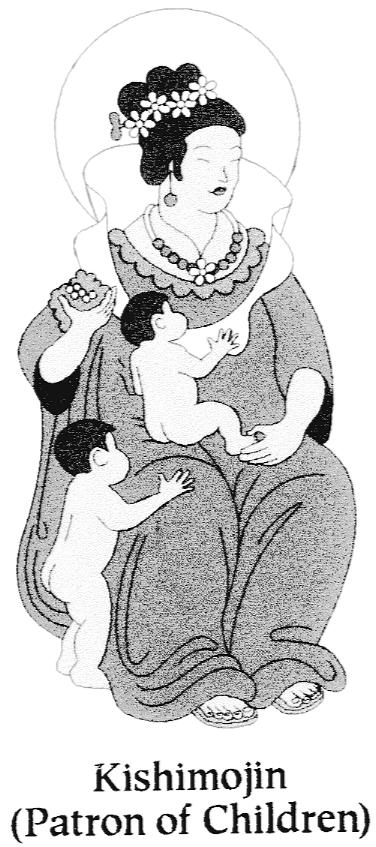 "'You are a blessing of God,'" interpreted the lama. "All of us think of you in such terms now. The way you behave toward our children, and toward these pitiful victims of the evil Manchu scourge, lead us to think of you as Kishimojin come to minister among us - the patron saint of children and the helpless."
Romelle turned away with a cough of embarrassment. "'You are a blessing of God,'" interpreted the lama. "All of us think of you in such terms now. The way you behave toward our children, and toward these pitiful victims of the evil Manchu scourge, lead us to think of you as Kishimojin come to minister among us - the patron saint of children and the helpless."
Romelle turned away with a cough of embarrassment.
|