The second message came during a brief visit to Paris by the Empress Eugénie on the occasion of her sixty-seventh birthday in May 1893. A large suite was always maintained for her at a fashionable hotel facing the Tuileries Gardens, where her palace had stood before its destruction in the disastrous days of the Paris Commune.
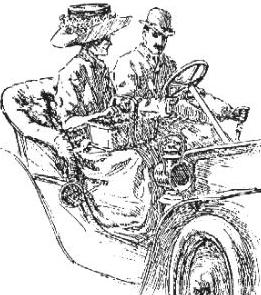 She called personally for Philo in the electric brougham she kept in the city as a runabout.
"The Place Dauphine is so slummy these days, just pull up in front and honk," she instructed the chauffeur. "When the captain comes out, let him drive. You wait in Madame Adrienne's kitchen for our return."
Later, after they were underway, she said to Philo, "Before all the artists and models moved in, I remember what a genteel little park the Dauphine was during your first days in Paris," she said "when you were living here with that gorgeous Roxanne...oh! Forgive me, Captain!"
She had noted the stricken look on his face when she mentioned the lady's name. He waved away her concern.
"Your Imperial Majesty has the right to speak of whomever she wishes," he offered, but the tone of his voice betrayed his words with a lamentable sense of hurt.
A kind woman who never meant to bruise, she hastened to correct her gaffe. "No, I was thoughtless to have spoken of it. I perfectly understand your sensitivity. Do you remember Lady Waldegrave in London, to whom you entrusted Beth's education on her first trip to England? Of course, we all owe her a great deal. It was through her that my son met his own dear Queen of Scots. I mention her because she tried to pump Beth for information about that period of your life. She spoke to Beth of something mysterious minvolving an actress which occurred some years ago in Paris. Of course, Beth was in the dark on that matter and could say nothing. Only you and I know the truth, mon cher capitaine, and I shall never tell. Lady Waldegrave did, however, make Beth aware that your hair turned white around that time. You were so young! What...thirty-five or so?"
Self-consciously, Philo stroked his hair with his fingers.
"The Empress Elizabeth's doctor in Vienna told me," Philo related, "that on rare occasions an emotional upset of some magnitude will cause that."
His tone now carried an air of finality. Eugénie correctly perceived that it was time to change the subject.
"You will enjoy this jaunt to Malmaison," she said brightly. "I love driving out there in the Parisian spring to check on the progress of the Empress Josephine's rose bushes. They should be abud now, ready to burst into summer! How I regret that you have become such a stay-at-home these days! How lovely it would be to have you as a guest aboard the Thistle for a voyage to Cap Martin on the Riviera. You have never visited my Villa Cyrnos there!"
"In time, Majesty," he replied sadly, "when this waiting for my son and Doctor Dash comes to an end, I shall be at your door with a cheerful face and a few lines of repartee to match your ready wit. I suppose I have become a bit of a stick through all this. But, then, I'm not the young fellow I was in olden times!"
"Pshaw!" she chided in good humor. "If you are no longer young, what am I?"
They laughed. A proper tone had been set for them to enjoy each other for the rest of the afternoon.
The rose bushes at Malmaison were flawless. Josephine had imported many from Martinique and planted them herself, as symbols of her love for Napoleon. Some were already in bloom.
"Your birthday has made of May a month of roses," smiled Philo to the Empress over an exceptionally lovely crimson flower neither could resist caressing.
"The gardeners here are specially trained in the care of roses," she said, modestly ignoring his compliment. "I demand approval of them myself. I shall be interviewing one today. Do you know that many of the treasures here at Malmaison have come from my own Napoleonic collection? I believe that history is best served by preserving for future generations its artifacts. Those who follow us may literally touch the past, giving it a sense of reality. I represented France at the opening of the Suez Canal in 1868, the year before I met you. The Khedive of Egypt conducted me to a room in the Great Pyramid, furnished authentically as it might have been in ancient times. What an experience of the past it gave me! I have never forgotten. I want that dynamic stimulation for those who visit Malmaison."
She received the prospective gardener in Napoleon's study, located at one end of Malmaison, a classically Empire suite as renowned for its stately elegance as was Josephine's upstairs bedroom for its loveliness. Its appointments, inspired by the First Consul's Egyptian Campaign of 1798 and his admiration for the disciplined Legions of ancient Rome, glowed with gilt, black, yellow, and mirror-polished woods.
The man's physique was powerful, but compact. Short of stature, he was large-chested, with a bullish neck. Out of proportion were the delicate hands that reposed calmly in his lap when he was given permission to sit before the Empress.
Philo remained with them, standing behind Eugénie who sat at the First Emperor's magnificent desk. His pose was characteristic, a living representation of his Civil War portrait hanging again over the mantel in Baltimore. It was the Philo everyone remembered best. His arms were crossed on his chest. His legs were spread apart as if balanced on a pitching deck. His head was tilted back, with a curl gone astray on his forehead.
Eugénie surveyed the applicant with a vaguely mistrustful gaze. "I do not understand the condition of your hands, sir. They are not those of a man accustomed to pruning among thorns."
Dropping his arms to his side, Philo suddenly moved forward, warily insinuating himself into a position from which he could instantly lunge between the man and the Empress.
"Who are you, M'sieur?" he demanded. "Her Imperial Majesty is correct in her estimation of your hands. They are those of a pianist, or a surgeon, or...perhaps...an assassin, but not those of a gardener!"
With surprising composure, the man chuckled.
"You are right, sir," he said. "I am not a gardener, but neither am I a pianist. I am, however, one of the other two."
His French was elegantly spoken, scarcely hinting at an accent, but a trace of something was there. He smiled. His teeth were even and white.
It was his smile that gave the Empress further pause.
"I know you from somewhere!" she declared angrily. "What is this charade? Who are you?"
He threw up his hands in a gesture of surrender. "Ah! You have won the game, Madame! May I plead innocent to the charge of assassin? I am Chavadzy, Your Imperial Majesty, surgeon in the service of the mighty Alexander the Third, Tsar of all the Russias. I am also your obedient servant, Madame, and devoted friend to Doctors Bart and Dash. I know all about you, Captain Duncan, and might have met you personally had I not been distracted by a real assassin I met in the Place Dauphine three years ago next week!"
"You were the potseller who delivered the message to my housekeeper!" Philo exclaimed.
Chavadzy rose and bowed.
"And you were Prince Dayan's mentor at the Russian Imperial Court!" added Eugénie.
She leaned toward him. "My dear friend, what is the meaning of this ruse?"
Chavadzy clicked his tongue. "There are many political complications in this world, Madame."
She nodded. "As I, surely, must understand."
"And I, as well," Philo agreed.
"I see that you have put on a bit of weight since we last saw one another in Scotland in 1880," the Empress remarked. "You were very young, but now your face is full, and that mustache is new to me, and the goatee. They make a most agreeable combination. It's no wonder I did not recognize you. Our exchange of correspondence all these years has not included any sketches!"
"No, Madame," Chavadzy said, "but the years have not dimmed your vivacity a whit. Your beauty is still legend in Europe, with just cause!"
"Now, what is this really all about?" she asked, expressing a blithe impatience with compliments her ingenuous nature took to be matters of form.
"I have come to tell you that Doctors Bart and Dash are very much alive. However, their lives have become entwined with international politics of the most dangerous kind - of the very sort, Madame, that destroyed your husband's reign and sent you into exile. Thus, I have engaged in an elaborate, as you put it, 'charade.' It is fortunate that the captain joined you today, giving me an opportunity to speak with you both.
"It is important that you know, Madame, Doctor Dash wishes for Prince Dayan to continue his studies in England. He is not to return to Outer Mongolia until further word is received from his father.
"As for you, Captain, Doctor Bart expresses his gratitude for all you and your family are doing for his daughter. He asks you not to worry about him. He will communicate with you when he can.
"One thing more: the phrase Dragon's Heart identifies any connection or association with the matter of Doctors Bart and Dash. If a message or person comes to you with that code, pay attention!
"There is great danger for all of us. Please ask no questions or involve yourselves in any way which is not absolutely essential. Our enemies are vicious. They will stop at nothing. Exalted rank is no deterrent.
"Now I must end the charade. Goodbye, my friends. Pray God we meet again!" She called personally for Philo in the electric brougham she kept in the city as a runabout.
"The Place Dauphine is so slummy these days, just pull up in front and honk," she instructed the chauffeur. "When the captain comes out, let him drive. You wait in Madame Adrienne's kitchen for our return."
Later, after they were underway, she said to Philo, "Before all the artists and models moved in, I remember what a genteel little park the Dauphine was during your first days in Paris," she said "when you were living here with that gorgeous Roxanne...oh! Forgive me, Captain!"
She had noted the stricken look on his face when she mentioned the lady's name. He waved away her concern.
"Your Imperial Majesty has the right to speak of whomever she wishes," he offered, but the tone of his voice betrayed his words with a lamentable sense of hurt.
A kind woman who never meant to bruise, she hastened to correct her gaffe. "No, I was thoughtless to have spoken of it. I perfectly understand your sensitivity. Do you remember Lady Waldegrave in London, to whom you entrusted Beth's education on her first trip to England? Of course, we all owe her a great deal. It was through her that my son met his own dear Queen of Scots. I mention her because she tried to pump Beth for information about that period of your life. She spoke to Beth of something mysterious minvolving an actress which occurred some years ago in Paris. Of course, Beth was in the dark on that matter and could say nothing. Only you and I know the truth, mon cher capitaine, and I shall never tell. Lady Waldegrave did, however, make Beth aware that your hair turned white around that time. You were so young! What...thirty-five or so?"
Self-consciously, Philo stroked his hair with his fingers.
"The Empress Elizabeth's doctor in Vienna told me," Philo related, "that on rare occasions an emotional upset of some magnitude will cause that."
His tone now carried an air of finality. Eugénie correctly perceived that it was time to change the subject.
"You will enjoy this jaunt to Malmaison," she said brightly. "I love driving out there in the Parisian spring to check on the progress of the Empress Josephine's rose bushes. They should be abud now, ready to burst into summer! How I regret that you have become such a stay-at-home these days! How lovely it would be to have you as a guest aboard the Thistle for a voyage to Cap Martin on the Riviera. You have never visited my Villa Cyrnos there!"
"In time, Majesty," he replied sadly, "when this waiting for my son and Doctor Dash comes to an end, I shall be at your door with a cheerful face and a few lines of repartee to match your ready wit. I suppose I have become a bit of a stick through all this. But, then, I'm not the young fellow I was in olden times!"
"Pshaw!" she chided in good humor. "If you are no longer young, what am I?"
They laughed. A proper tone had been set for them to enjoy each other for the rest of the afternoon.
The rose bushes at Malmaison were flawless. Josephine had imported many from Martinique and planted them herself, as symbols of her love for Napoleon. Some were already in bloom.
"Your birthday has made of May a month of roses," smiled Philo to the Empress over an exceptionally lovely crimson flower neither could resist caressing.
"The gardeners here are specially trained in the care of roses," she said, modestly ignoring his compliment. "I demand approval of them myself. I shall be interviewing one today. Do you know that many of the treasures here at Malmaison have come from my own Napoleonic collection? I believe that history is best served by preserving for future generations its artifacts. Those who follow us may literally touch the past, giving it a sense of reality. I represented France at the opening of the Suez Canal in 1868, the year before I met you. The Khedive of Egypt conducted me to a room in the Great Pyramid, furnished authentically as it might have been in ancient times. What an experience of the past it gave me! I have never forgotten. I want that dynamic stimulation for those who visit Malmaison."
She received the prospective gardener in Napoleon's study, located at one end of Malmaison, a classically Empire suite as renowned for its stately elegance as was Josephine's upstairs bedroom for its loveliness. Its appointments, inspired by the First Consul's Egyptian Campaign of 1798 and his admiration for the disciplined Legions of ancient Rome, glowed with gilt, black, yellow, and mirror-polished woods.
The man's physique was powerful, but compact. Short of stature, he was large-chested, with a bullish neck. Out of proportion were the delicate hands that reposed calmly in his lap when he was given permission to sit before the Empress.
Philo remained with them, standing behind Eugénie who sat at the First Emperor's magnificent desk. His pose was characteristic, a living representation of his Civil War portrait hanging again over the mantel in Baltimore. It was the Philo everyone remembered best. His arms were crossed on his chest. His legs were spread apart as if balanced on a pitching deck. His head was tilted back, with a curl gone astray on his forehead.
Eugénie surveyed the applicant with a vaguely mistrustful gaze. "I do not understand the condition of your hands, sir. They are not those of a man accustomed to pruning among thorns."
Dropping his arms to his side, Philo suddenly moved forward, warily insinuating himself into a position from which he could instantly lunge between the man and the Empress.
"Who are you, M'sieur?" he demanded. "Her Imperial Majesty is correct in her estimation of your hands. They are those of a pianist, or a surgeon, or...perhaps...an assassin, but not those of a gardener!"
With surprising composure, the man chuckled.
"You are right, sir," he said. "I am not a gardener, but neither am I a pianist. I am, however, one of the other two."
His French was elegantly spoken, scarcely hinting at an accent, but a trace of something was there. He smiled. His teeth were even and white.
It was his smile that gave the Empress further pause.
"I know you from somewhere!" she declared angrily. "What is this charade? Who are you?"
He threw up his hands in a gesture of surrender. "Ah! You have won the game, Madame! May I plead innocent to the charge of assassin? I am Chavadzy, Your Imperial Majesty, surgeon in the service of the mighty Alexander the Third, Tsar of all the Russias. I am also your obedient servant, Madame, and devoted friend to Doctors Bart and Dash. I know all about you, Captain Duncan, and might have met you personally had I not been distracted by a real assassin I met in the Place Dauphine three years ago next week!"
"You were the potseller who delivered the message to my housekeeper!" Philo exclaimed.
Chavadzy rose and bowed.
"And you were Prince Dayan's mentor at the Russian Imperial Court!" added Eugénie.
She leaned toward him. "My dear friend, what is the meaning of this ruse?"
Chavadzy clicked his tongue. "There are many political complications in this world, Madame."
She nodded. "As I, surely, must understand."
"And I, as well," Philo agreed.
"I see that you have put on a bit of weight since we last saw one another in Scotland in 1880," the Empress remarked. "You were very young, but now your face is full, and that mustache is new to me, and the goatee. They make a most agreeable combination. It's no wonder I did not recognize you. Our exchange of correspondence all these years has not included any sketches!"
"No, Madame," Chavadzy said, "but the years have not dimmed your vivacity a whit. Your beauty is still legend in Europe, with just cause!"
"Now, what is this really all about?" she asked, expressing a blithe impatience with compliments her ingenuous nature took to be matters of form.
"I have come to tell you that Doctors Bart and Dash are very much alive. However, their lives have become entwined with international politics of the most dangerous kind - of the very sort, Madame, that destroyed your husband's reign and sent you into exile. Thus, I have engaged in an elaborate, as you put it, 'charade.' It is fortunate that the captain joined you today, giving me an opportunity to speak with you both.
"It is important that you know, Madame, Doctor Dash wishes for Prince Dayan to continue his studies in England. He is not to return to Outer Mongolia until further word is received from his father.
"As for you, Captain, Doctor Bart expresses his gratitude for all you and your family are doing for his daughter. He asks you not to worry about him. He will communicate with you when he can.
"One thing more: the phrase Dragon's Heart identifies any connection or association with the matter of Doctors Bart and Dash. If a message or person comes to you with that code, pay attention!
"There is great danger for all of us. Please ask no questions or involve yourselves in any way which is not absolutely essential. Our enemies are vicious. They will stop at nothing. Exalted rank is no deterrent.
"Now I must end the charade. Goodbye, my friends. Pray God we meet again!"
|